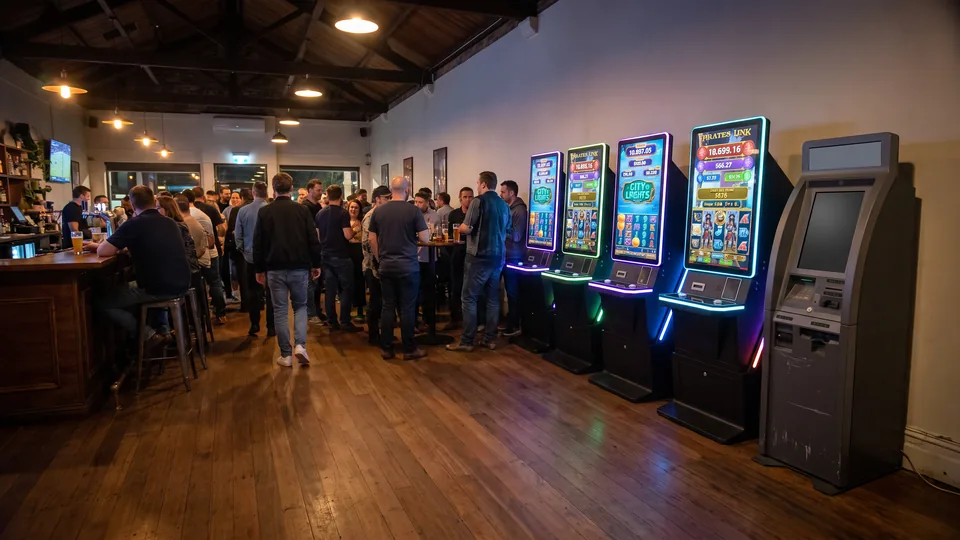
Why are your slow hours getting slower?
Because fewer people are walking in, and that has been true for a year and a half. The National Restaurant Association's operator survey published on 31 August 2026 found that 49 percent of operators reported lower customer traffic in July, against 40 percent who said traffic rose on the year. July was the seventeenth time in eighteen months that operators reported a net decline.
The longer lens says the same thing. In its 2026 State of the Restaurant Industry report, published 12 February 2026, the Association wrote that 60 percent of operators had reported softer customer traffic over the previous year. In the same report, 42 percent of operators said their restaurant was not profitable.
The appetite is still there. More than 7 in 10 consumers told the Association they would use restaurants more often if they had more disposable income. People have not stopped liking your room. They have gotten choosier about when they come, and the hours they skip are the ones between your rushes.
What does an empty hour actually cost you?
The same as a full one. Rent, insurance, base labor and the lights do not check whether anybody is sitting down. Count the hours on an illustrative restaurant, with every input below labeled illustrative rather than measured.
| Illustrative input | Hours a week |
|---|---|
| Open 11am to 10pm, seven days | 77 |
| Lunch rush, about 2 hours a day | 14 |
| Dinner rush, about 3 hours a day | 21 |
| Hours that carry themselves | 35 |
| Hours that do not | 42 |
Forty two hours a week sit outside both rushes. That is more than half your open week, with the lease running, the lights on and a cook on the clock. You already paid for those hours. So a dollar earned inside them is not covering rent a second time. It lands against costs you settled when you signed the lease, which is why the slow hours are worth more attention than they usually get.
That is also why every list of slow day ideas points at the same window. Happy hour, office lunch deals, a trivia night. They work. They also need somebody to run them, week after week, and you already know how that goes in month three.
What is an amusement machine placement, exactly?
It is an arrangement where an operator owns the machine and you own the space it sits on. You buy nothing and you fix nothing. The companies that do this word it plainly on their own sites. Amusement Devices, Inc. writes, "We pay for the machines and set them up in your establishment, at NO COST to you!" The same page adds, "Once they are up and running, we share in the revenue that they generate." A & M Amusements offers to "Transform unused floor space into a consistent revenue stream" at "no upfront cost and with zero disruption to your daily operations". It also promises, "We handle all maintenance, servicing, and upkeep."
Underneath the sales language, the split of duties is the same everywhere.
| You provide | The operator provides |
|---|---|
| The floor space | The machines and the redemption kiosk |
| A standard 120V outlet | Delivery and installation |
| Staff who know what it is | Service, maintenance and repairs |
| Nothing else | Collections and reporting |
One thing to expect while you shop. None of these companies publishes what your share of the income would be. Neither page quoted above names a number, and that is the category norm rather than a warning sign. It tells you the share is negotiated, so ask for it early, get it in writing, and treat "call us" as an invitation rather than an answer.
Where would a machine even go in a restaurant?
In the two places your guests already stand still. That is the waiting area by the host stand, and the bar where people sit before a table opens up. Both are spots where somebody has time on their hands and nothing to do with it.

The space involved is smaller than most owners picture. One machine is about 2 ft by 2 ft. Machines are delivered in pairs, so two side by side run about 4 ft by 2 ft. A full standard install is two machines plus a redemption kiosk, about 6 ft by 2 ft, which works out to roughly 12 square feet. It runs off a standard 120V wall outlet, so no electrician is involved.
Twelve square feet is smaller than most two tops. It is the corner that currently holds a plant and a stack of menus. If you want to measure it against your own floor plan before anyone visits, we went through the dimensions in how much floor space entertainment equipment actually needs. If you are still weighing a machine against a happy hour or a trivia night, what to do with the dead hours between lunch and dinner prices those options side by side.
What does it do for a guest who is standing there waiting?
It gives them something to do, and that is worth more than it sounds. David Maister's work on the psychology of waiting lines gives the principle its name: occupied time feels shorter than unoccupied time. The open Services Management textbook that teaches it reaches for a restaurant as its first example, handing waiting guests a menu to browse. A quoted wait of twenty minutes is the same twenty minutes either way. It just costs you less goodwill when the guest is busy.
There is a second effect, on the people already seated and deciding whether to stay for one more. Annika Stensson of the National Restaurant Association told rd+d Magazine in January 2015 that younger customers "tend to put premium value on social and interactive activities when visiting restaurants". Stensson also said that "adding gaming elements can also bring in business from local leagues that hold regular tournaments". Michael Auger of Trifecta Management Group put the space case in one line in the same article: "We look at our entire facility as one big dining room."
Do not read the entertainment chains as a forecast for your room. Robert Thompson, founder of Punch Bowl Social, told rd+d that food and drink was roughly 85 percent of his revenue and gaming roughly 15 percent. That is a business built around games, not a dining room with a machine near the host stand. Treat it as evidence the category is real. What a placed machine does for you is smaller and steadier, and it is the same lever we covered in how to get customers to stay longer: it holds a guest in the building a little while more.
What should you pin down before you give up the space?
Five things, and get all five in writing before anything is installed.
- What is the share, and when can it change? A number said across the pass is not a term. It belongs in the agreement.
- Who services it, and how fast? Ask for a response window in hours. "We take care of it" is not an answer.
- How do you see what it took in? Ask to look at a sample report before you sign.
- What is the term, and how do you get out? Auto renewal and exclusivity clauses are where owners get stuck for years.
- What is the machine, legally, and who says so? Ask for certification from a named independent laboratory, on paper.
That last question carries more weight in a dining room than in a late night bar, because your room has families in it at six o'clock and your name is on the sign. Our list of questions to ask any entertainment vendor works through all five with a printable comparison sheet, and countertop games for bars covers the buy it yourself route if you would rather own the box.
Where does a no-chance system fit?
Right at question five. Foxfire is a no-chance video game system. Every outcome is set in advance, and players can preview it before every play, so there is no chance anywhere in it. Players choose to play and collect their prize. Eclipse Compliance Testing, an independent laboratory accredited to ISO/IEC 17025 and 17020 and used by state gaming authorities, reviewed the source code and stated its verdict word for word: "This device is not a slot machine." Foxfire systems are certified at the source code level.
The placement side works exactly the way this article describes. Foxfire provides the machines and the redemption kiosk, delivery and installation, service and maintenance, and collections and reporting. You provide roughly 12 square feet and a standard 120V outlet. Setup is $0 and maintenance is $0.
What it earns depends on three things and no marketing copy can shortcut them: how many people come through, how often they play, and how many machines are on the floor. That is the arithmetic to ask any operator to walk you through, ours included. If you want the model rather than the vertical, see how it works across venue types. For a room like yours, start with the restaurants page.