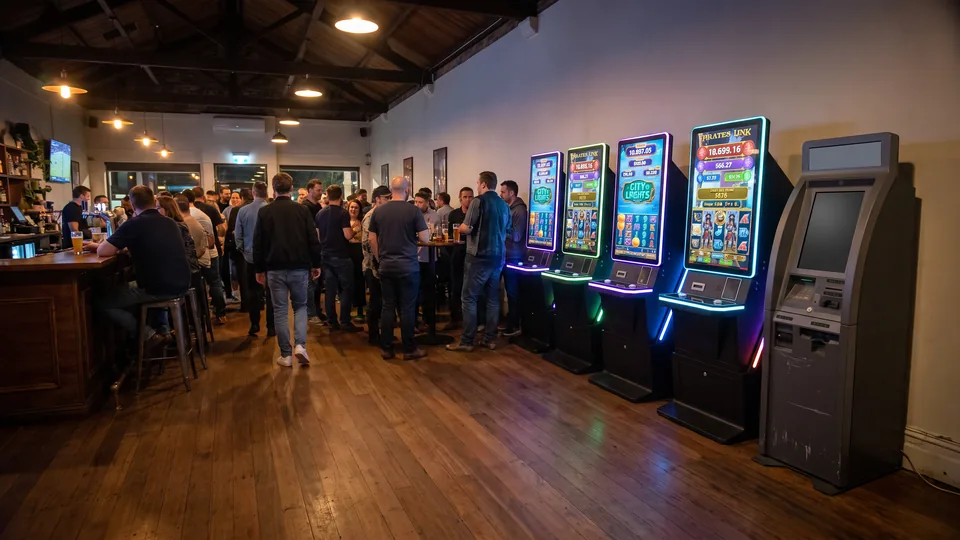
Why do people have one drink and leave?
Because there is nothing to do after the first one.
Think about last Tuesday. Two guys come in around seven. They order, they talk, they finish. By 7:40 the conversation hits a natural stop and one of them checks his phone. Nothing in the room gives them a reason to order again, so they settle up and go.
You did not lose them to the bar down the street. You lost them to forty empty minutes.
Most owners answer this with the menu. A new cocktail, a better beer list, a sharper special. Those are worth doing, and they are answers to a different question. A better drink raises what the first round is worth. It does not add a second round to a visit that is already over.
What is a short visit actually costing you?
More than it looks, because the expensive part of the night is already paid for.
Toast splits restaurant costs into two buckets. Fixed costs like rent and insurance are, in its words, "consistent month to month and harder to change quickly." Variable costs like food and hourly labor move with sales. On a quiet Tuesday your fixed costs are spent the moment you open the door, whether forty people walk in or four.
That changes what one more drink is worth. Toast puts the average net profit margin for a bar between 10 and 15 percent, and its analysis of its own customer base puts average pour cost between 15 and 28 percent, against an industry standard near 20 percent. The drink is cheap to make. The building is the expensive part, and you already bought it for the night.
Here is the shape of it. Say a longer visit means one more $7 drink. The numbers below are illustrative, written to show the math rather than to describe any real bar. Drop your own in.
| An illustrative Tuesday | Guests | Average visit | Average spend per guest | Revenue for the night |
|---|---|---|---|---|
| Tonight | 40 | 50 minutes | $16.00 | $640 |
| Ten of them stay 30 minutes longer | 40 | Mixed | $17.75 | $710 |
Seventy dollars. That is a quarter of the room staying half an hour longer, and nothing else about the night changed. At a 20 percent pour cost, about $56 of that seventy is gross margin. Since the rent and the base labor were already committed, most of that $56 lands as profit instead of as new cost.
Now run it across the calendar. Three slow nights a week, fifty weeks a year, is 150 nights. That is $10,500 in revenue and roughly $8,400 in gross margin, off the same building, the same staff, and the same guests. The only thing that changed is how long they stayed.
Why does turning tables faster get this backwards on a slow night?
Because turning a table only makes you money when somebody is waiting for the seat.
The standard metric here is table turnover rate: parties served divided by tables. Toast's guide to it is blunt about why operators chase the number. More parties in the same period means more sales. On a Friday with a line at the door, that is exactly right.
On a Tuesday there is no line. The seat that opens at 7:40 sits empty until nine. Turning it faster buys you nothing, and every minute you shave off a visit is spend you handed back for free.
So the lever flips depending on the night. On weekends, move people through. On weeknights, keep people in. Most bars run the weekend playbook all seven nights, because the weekend is the night everyone plans around. If the quiet nights are your real problem, we ran that math in full in why weeknights are the biggest untapped revenue in a neighborhood bar.
What actually keeps someone at the bar?
Something to do that does not depend on you pouring another drink.
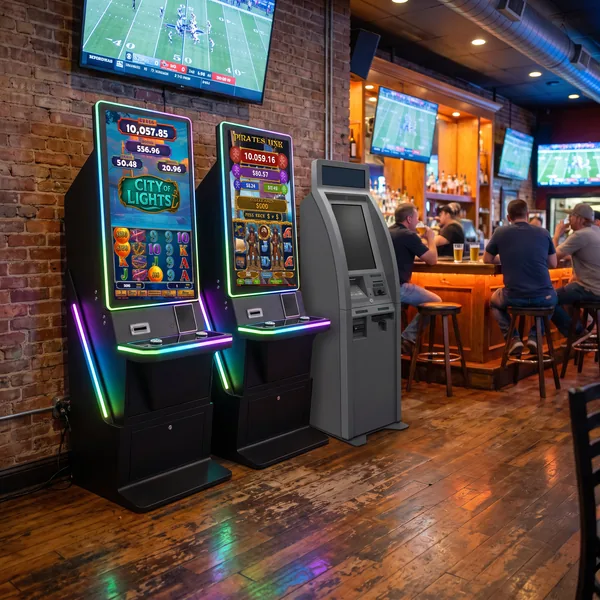
The link between time on site and money spent is well documented outside bars. Nutmeg, citing research by Path Intelligence, reports that increases in average daily dwell time of just 1 percent were associated with increases in daily sales of 1.3 percent. Treat that as a retail and hospitality principle rather than bar data, because that is what it is. It still matches what you see on your own floor on the nights the room has something going on.
What holds people is activity, and the activity has to survive an ordinary Tuesday. Trivia works, and it needs a host, a sound system, and a promise you keep every single week. Live music works and costs real money. Both are events. They occupy a date on the calendar rather than a corner of the room, and they stop the moment you stop running them.
Annika Stensson, senior manager of research at the National Restaurant Association, put the appeal plainly to rd+d Magazine: "Restaurants and bars are venues for social gatherings, and what's more social than engaging in a good-natured game with friends and family?" She noted that younger customers put premium value on social and interactive activities when they go out. She also noted that adding gaming elements can bring in business from local leagues that hold regular tournaments.
Operators who built around that watch it show up in the food and drink numbers. Robert Thompson, founder and CEO of Punch Bowl Social in Denver, told the same publication: "We do a lot of private parties around the games, which also helps drive more food and beverage [sales]."
You do not need to become Punch Bowl Social. You need one thing in the room that gives a table a reason to stay past the natural end of a conversation.
Where does placed entertainment fit?
It is the version of this that runs without you.
Placed entertainment means an operator puts equipment in your building, services it, and shares the income it brings in. Here is who does what.
| You provide | The operator provides |
|---|---|
| Floor space, about 12 square feet for a standard install | The machines and the redemption kiosk |
| A standard 120V wall outlet | Delivery and installation |
| Staff who know what is on the floor | Service, maintenance, and repairs |
| Collections and reporting |
Setup cost to you is zero. Maintenance cost to you is zero.
Space is the objection worth answering early, because it is the one that ends the conversation. A Foxfire machine measures about 2 feet by 2 feet. A standard install is two machines plus a redemption kiosk sitting side by side, about 6 feet by 2 feet in total, or roughly 12 square feet. That is a corner, not a floor plan. If you want to measure before you talk to anyone, how much floor space entertainment equipment actually needs has the clearances.
What placed entertainment returns comes down to three things. How many people are in the building. How often they play. How many machines are on the floor. That is the whole list, and it is why this belongs in a conversation about dwell time rather than in a conversation about equipment. Two of those three levers are the lever you were already pulling.
Be exact about what the equipment is, because your regulars will ask and your staff should have the answer. Foxfire is a no-chance video game system. The outcome is predetermined and shown to the player before they pay, so the element of chance is removed. Eclipse Compliance Testing, an independent accredited lab used by state gaming authorities and the lottery industry, confirmed that at source-code level. Their verdict, word for word: "This device is not a slot machine." Foxfire systems are certified legal in all 50 U.S. states. What your specific venue may operate is a question for your own counsel, and any vendor who answers it for you is telling you what you want to hear.
If you would rather see the process than the principle, what it takes to add a game machine to your bar walks through it from first call to install, and how it works covers the arrangement itself. The same idea holds in an airport terminal, where layover time turns into concession spend. For the venue side, start with bars and clubs or restaurants, or browse all industries.
None of this replaces a good bar. A reason to stay is worth nothing if the beer is warm and nobody says hello. But once the room is right, the cheapest revenue you will ever add is the round somebody orders because they were still sitting there.