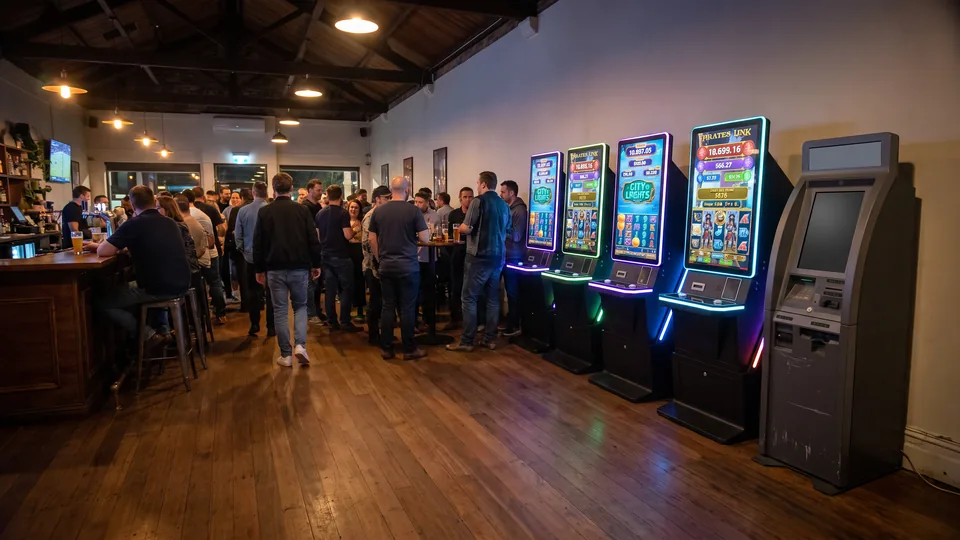
It is Tuesday at 8pm. Three people sit at your bar. You have a dead corner and a slow week. Then a friendly vendor walks in with a contract. The pitch sounds great, so read the paper before you shake hands.
What should the contract say about getting out?
It should say how long you are in, how you leave, and how much notice you owe. Read this part first. It decides how stuck you are if the vendor lets you down.
Here is a real example. The Amusement & Music Operators Association (AMOA) publishes a standard Location Agreement. It starts with a 60 month term and renews on its own. To leave, you give 180 days notice. Source: AMOA standard Location Agreement, terms as published via RePlay Magazine, 2018, association current as of 2026.
A long term is normal. Ask these five things before you sign:
- How many months is the first term?
- Does it renew on its own?
- Does the notice clock reset if you miss the window?
- How many days notice do you owe, and how do you send it?
- What happens to the machine when the contract ends?
A vendor who cannot answer each one in a sentence has not read their own contract. Do this Monday: find any contract you have now and circle the notice line.
How should the money split be written down?
Get three things in writing. How the split is worked out. When you get paid. And how you can check the numbers yourself. A percentage quoted across the bar answers none of them. A standard revenue sharing agreement is built to answer all three. Source: ContractsCounsel, guidance on revenue sharing agreement terms.
This article will not hand you a split to expect, from Foxfire or anyone else. The honest answer depends on the vendor and your town. Ask for the math instead:
- How is gross revenue counted before the split?
- Is it counted on the machine, or reported separately?
- How often do you get paid?
- What audit rights do you have if a number looks wrong?
A vendor who trusts their numbers hands you the formula without a fuss. Try this: ask any vendor to write the formula on one page.
Who fixes it, and how fast?
The vendor should fix it, and the contract should say how fast, in hours. "As soon as possible" is not a number. A standard equipment lease puts repairs on whoever owns the equipment, and that is usually the vendor. Source: Toast, on leasing restaurant equipment. The AMOA standard Location Agreement puts that same job on the operator.
A dead machine on a Friday night is a lost weekend. So get the answers in writing:
- How many hours pass between a service call and a tech on site?
- Who pays for parts if it is not your fault?
- Do you get a loaner while yours is down?
Do this before you sign, not after the first breakdown.
What proof of certification and insurance should you ask for?
Ask for the name of the testing lab, its accreditation, and the full report. Eclipse Compliance Testing (ECT) is one such lab. It is accredited under ISO/IEC 17025 and ISO/IEC 17020. It has tested gaming, amusement, and skill game equipment in more than 250 regulated jurisdictions. Anyone can check that work, so it is not just a vendor's own claim. Source: Eclipse Compliance Testing, lab accreditation. For Foxfire's own equipment, that same lab reviewed the source code directly, and its certification report states: "This device is not a slot machine."
The certificate tells you what the machine does. It does not tell you who is covered if a guest gets hurt near it. Ask for a certificate of insurance. It should name your venue as an additional insured, which means you are covered too. It should cover general and product liability. A real bar equipment vendor carries that as standard. Source: Wexford Insurance, on insurance requirements for bar and vendor operations. If a vendor cannot show you both papers, keep looking.
What clauses quietly cost you money?
Three clauses do the most damage: exclusivity, auto renewal, and hidden fees.
Exclusivity means you cannot add any other vendor's machines, jukeboxes, ATMs, or games. That limits you for the life of the contract. Federal guidance treats that kind of lock in as a real limit on competition. Source: FTC, guidance on exclusive dealing.
Auto renewal restarts a long notice window every year you miss the cancel date. You end up locked in far longer than the first term said. Source: Flag.red, on red flags in vendor agreements.
Setup fees show up late in the document, after the price already looked settled. Source: VendingGroup, on vendor contract red and green flags.
None of these ends a deal alone. The trouble is finding them three years into a five year term. Check this week: search your contract for the words "exclusive," "renew," and "fee."
How do you compare two vendors side by side?
Print the table below and hand it to every vendor. Do not sign until every row has an answer in writing, not a promise across the bar. Getting agreements in writing before a problem starts is standard advice for any venue that brings in outside equipment. Source: Hotel Management, on vendor agreements.
Vendor comparison checklist
| Question | Vendor A | Vendor B |
|---|---|---|
| How long is the first term? Does it renew? | ||
| How much notice to cancel, and how? | ||
| How is revenue counted, and how often are you paid? | ||
| Can you check the numbers yourself? | ||
| Most hours before a repair tech arrives? | ||
| Who pays for parts? Who gives you a backup unit? | ||
| Which lab certified it, and is it accredited? Can you see the report? | ||
| Do they show proof of general and product liability insurance? | ||
| Is there an exclusivity clause? What does it block? | ||
| Who pays for power? Who owns the floor space during the term? |
A vendor who fills in every row fast has a contract that can take a hard look. One who talks around two or three rows has told you where to push, or where to walk away. For the setup side, see what it takes to add a game machine to your bar and how much floor space entertainment equipment needs. To see how Foxfire's own equipment is set up and supported, read how it works. Or browse more guides in Resources. For venue by venue detail, see all industries.