Why is your canteen income falling?
Because the canteen runs on people walking through the door, and there are fewer of them every year. Nothing about how you run the bar has to change for the income to drop. The roster shrinks, and the register follows.
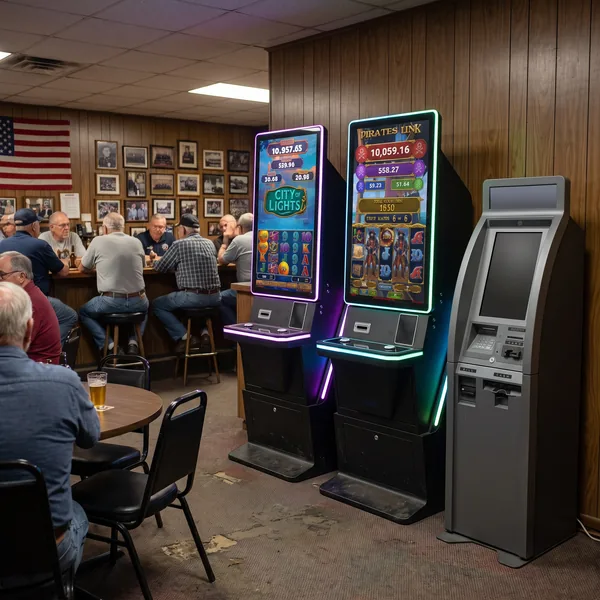
The numbers behind that are not small. The American Legion has lost more than 700,000 members in the last decade. The VFW declined by one million members between 1992 and 2019. Both figures come from reporting by Jessica Mordacq in the Riverside-Brookfield Landmark in May 2024. In that same reporting, Gregory Walker, commander of American Legion Post 838 in Maywood, said his post generates roughly 90 percent of its revenue from the canteen.
That last figure is one commander describing one post, not a national average. But it explains why the pressure lands so hard. When the bar is nearly the whole budget, a slow year at the bar is a slow year for everything the post does.
The consequences are already on the record. CBS New York reported in November 2021 that 77 VFW posts had closed or been consolidated since the pandemic began, at least three of them on Long Island.
Can you raise dues enough to close the gap?
Almost never, and the arithmetic shows why in about thirty seconds. CBS New York put post membership fees at under fifty dollars a year while noting that upkeep is on the rise. A number that small does not move much, no matter what you multiply it by.
Here is the math on an illustrative post. The member count and the dues figure below are examples for the sake of showing the shape of the problem, not data from any real post.
| Scenario | Members | Dues per year | Annual dues income | Change |
|---|---|---|---|---|
| Today | 200 | $45 | $9,000 | Baseline |
| Raise dues 20 percent | 200 | $54 | $10,800 | Up $1,800 a year |
| Raise dues 20 percent, lose 10 percent of members | 180 | $54 | $9,720 | Up $720 a year |
A twenty percent dues increase on that post raises about $150 a month. If the increase costs you even a handful of members, and on a membership living on fixed incomes it usually costs you some, you are up about $60 a month for the trouble. Meanwhile you have spent political capital at a meeting and given every member on the fence a reason to let it lapse.
Dues are not a growth lever. They are a membership commitment. Treat them that way and look elsewhere for the money.
What does the building cost you whether anyone shows up or not?
Most of it. The hall costs nearly the same on a dead Tuesday as it does on a packed Saturday, which is why empty hours are so expensive.
CBS New York named the pressures directly in its reporting on Long Island posts: insurance is costly, so are safety upgrades, and posts still need computers and Wi-Fi. The same reporting noted a problem specific to this world. Posts did not qualify for federal pandemic recovery funds because they have no employees.
So the cost base is fixed, the relief programs were built for someone else, and the volunteer labor that used to absorb the difference is thinning out along with the roster. That is the real shape of the problem, and it is why one more fundraiser is not the answer.
What revenue does not depend on how many members you have?
Revenue that comes from what people do while they are in the building, rather than from how many names are on the roster. That is the category worth your attention, because it grows without needing a recruiting miracle first.
Posts are already reaching for pieces of this. The Riverside-Brookfield Landmark reported that many are leaning harder on fundraising, and that some are opening their doors to the wider community and hosting public events. Both work. Both also cost you the one resource you have least of, which is volunteer hours.
Placed entertainment is the version of this that asks nothing of your volunteers. An operator puts equipment in your building, services it, and shares the income it produces. Your people do not run it, fix it, or staff it. Three things drive what it returns:
- Foot traffic. How many people are in the building.
- How often they play. How much of the time they are there turns into use.
- How many machines are on the floor. Capacity, within the space you have.
Notice what is not on that list. Membership count is not on it. Neither is volunteer availability. A post with a shrinking roster and a busy Friday can do well on this, which is exactly the situation many posts are in. We go deeper on the canteen side of this specifically in how to increase canteen revenue when membership is falling.
What does placed entertainment actually involve?
Less space and less work than most committees expect. The physical footprint is the part that surprises people most.

| The post provides | The operator provides |
|---|---|
| Floor space, about 12 square feet for a standard install | The machines and the redemption kiosk |
| A standard 120V wall outlet | Delivery and installation |
| Staff or volunteers who know what is on the floor | Service, maintenance, and repairs |
| Collections and reporting |
A Foxfire machine measures about 2 feet by 2 feet. A standard install is two machines plus a redemption kiosk, about 6 feet by 2 feet in total, or roughly 12 square feet. That is a corner most halls already waste. Setup cost to the post is zero, and maintenance cost to the post is zero.
On what the equipment is, be precise, because this is the question your committee will ask first. Foxfire is a no-chance video game system. Every outcome is set in advance, and players can preview it before every play, so the element of chance is removed. Eclipse Compliance Testing, an independent accredited lab used by state gaming authorities and the lottery industry, reviewed the source code and found no random number generator. Their verdict, word for word, was: "This device is not a slot machine." Foxfire systems are certified at the source code level.
What that certification does not do is answer the question of what your specific post may operate. Veterans and fraternal organizations sit under their own rules, separate from ordinary commercial venues, and those rules vary by state. That is a question for your own counsel, and any operator who tells you otherwise is telling you what you want to hear.
What should you ask before you sign anything?
The same questions you would ask any vendor, plus one that is specific to a post. Your committee will want the answers in writing, and a serious operator will have them ready.
- Who services the equipment, how fast, and what happens if it sits broken?
- How are collections counted, and what reporting do we get?
- What is the term, and how do we end it if it is not working?
- What does the post owe up front, and what does it owe monthly? The honest answer should be nothing on both.
- What documentation comes with the install, and will our counsel be able to review it?
We wrote the longer version of this for venue owners generally in what venue owners should ask before signing with any entertainment vendor. If floor space is your sticking point, how much floor space entertainment equipment actually needs has the measurements. And if your problem is really about the quiet nights rather than the roster, why weeknights are the biggest untapped revenue covers that math.
None of this replaces membership. Nothing does. But a post does not have to solve recruiting before it stabilizes its budget, and the order matters. Steady the money first, and you buy the time to do the rest. The veterans and fraternal clubs page shows how placement fits a post.