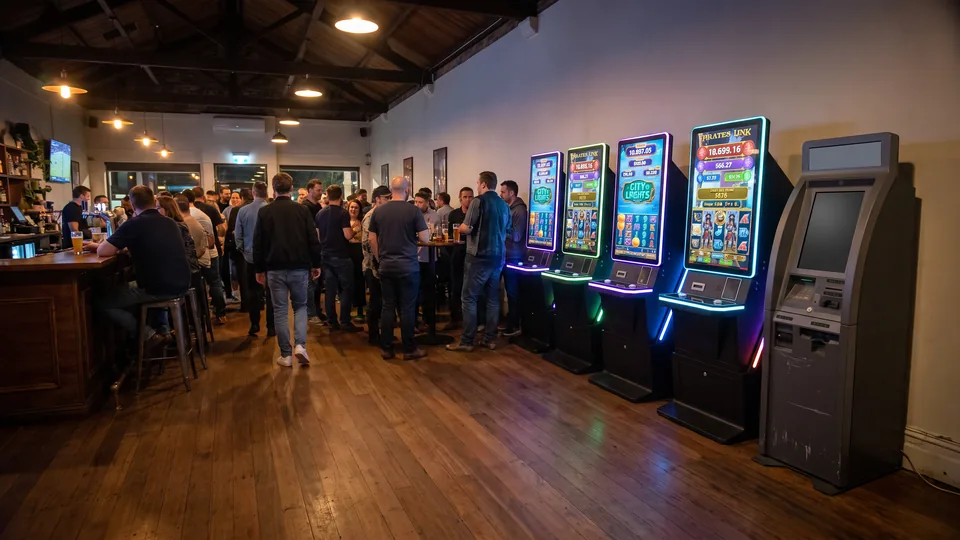
What makes a machine legally a slot machine?
A machine becomes a legal slot machine when three elements are all present at once: a prize, chance, and consideration, meaning the player pays something for a shot at that prize. This three-element test is the standard framework used across state gambling definitions (USLegal, Games of Chance Law and Legal Definition, accessed July 23, 2026).
You need all three together. Not one alone. A raffle has a prize and chance but no real consideration in some structures, and stays legal. A skill contest with an entry fee and a prize can still avoid the gambling label if chance is not a material factor. Take chance out of the equation entirely, on the other hand, and the machine falls outside the definition no matter how it looks, sounds, or is marketed.
Monday morning: write prize, chance and consideration on a sticky note. Keep it by the phone for your next vendor call.
What does predetermined outcome mean?
A predetermined outcome means the result of a given play already exists, pulled from a finite, fixed set of outcomes created before anyone touches the machine. Nothing is decided at the moment of play, because there is nothing left to decide. In plain words, the answer is fixed before anyone plays. A device patent for this exact design describes drawing each play's result from a pre-established, finite pool of outcomes rather than generating one live (US Patent US20140235309A1).
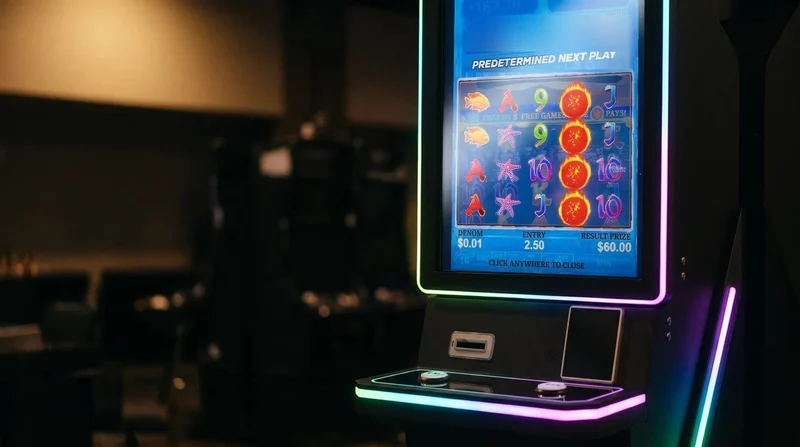
Now compare a slot machine. Its random number generator makes a fresh result the instant the player presses play. It draws from a huge range of possible combinations (Cache Creek Casino Resort, on slot machine RNGs). Some people think casinos secretly fix slot results in advance. They do not. Standard slots are genuinely random at each play. That is a different thing from a machine engineered to remove chance on purpose (Games Learning Society, on slot machine randomness). So "predetermined" can mean two very different things. Check which one you are being told about.
Monday morning: ask any vendor when the results are made. Before play, or during it?
How is that different from a skill game?
A skill game argues that player skill, not chance, decides the result. That keeps the device inside the same three-element test on contested ground. The legal category "game of skill" exists specifically to describe a contest where the outcome is meaningfully controlled by the player's own performance rather than by chance (LegalKart, Game of Skill vs Game of Chance).
A no-chance game system takes a different route entirely. It removes chance as an element, full stop, because the outcome exists before play regardless of how the player performs. That is not a skill claim. It is a structural one: there is no random process for skill, or anything else, to influence.
Skill games remain a live legal fight in several states. Courts and regulators in Missouri are challenging whether certain devices marketed under a no-chance or skill label actually eliminate chance in practice (Casino.org; Gambling Insider; Missouri Independent). Those disputes involve other companies' products. They underline the same point: a label is not a legal classification. Only an independent examination of the machine's actual mechanics is.
Monday morning: when a vendor uses a label, ask what an outside lab found.
Who verifies the difference, and how?
An independent testing lab verifies the difference by reviewing the machine's source code line by line. It looks for any random number generator, pseudo-random number generator, or other stochastic process anywhere in it. In plain words, the lab reads the machine's instructions and hunts for anything that could make a random result. For Foxfire's no-chance video game system, that lab is Eclipse Compliance Testing (ECT). ECT also certifies casino gaming systems, state lotteries, and tribal gaming equipment for other clients.
ECT's own verdict, from its certification report, reads word for word: "This device is not a slot machine." That finding is documented in report NA_KMNCCS_7397-00_EW. The review does not take a marketing claim at its word. It examines whether chance exists anywhere in the code, and certifies accordingly. On the strength of that review, Foxfire's system is certified legal in all 50 U.S. states.
Placing a machine comes after that question. What it takes to add a game machine to your bar covers the space, power, and permit steps.
Monday morning: ask your vendor for the lab's name and the report number.
Why does the difference decide what happens in court?
The difference decides court outcomes because judges and regulators apply the same three-element test to whatever device is in front of them. Chance is the element most devices actually argue about. When a machine's classification hinges on whether chance is present, removing chance changes which side of the line it falls on. That is a category-level statement about how the test works, not a claim about any specific state's ruling or any specific machine's outcome.
What is not settled, anywhere, is a blanket rule that every device calling itself a no-chance or skill-based system actually qualifies. The Missouri disputes cited above show the opposite: courts have pushed back hard on specific competitor devices when the actual mechanics did not hold up to scrutiny. That is exactly why the verification step matters more than the label a machine carries.
Monday morning: trust the report, not the label.
What should a venue owner check before placing any machine?
Ask for the certification report itself, not a summary of it, and read what was actually tested. Here are four questions to bring to any vendor:
- Who did the testing, and what is their accreditation? Get the lab's name, not just "independently certified."
- Did they review the source code, or just watch the game being played? Those are very different levels of scrutiny.
- Is there a report number you can ask to see? Does its language say what the sales copy says it says?
- Is the outcome generated at the moment of play, or read from a pre-existing set created beforehand? That single question is the whole legal distinction in this article.
Certification and local permitting are two separate questions. Confirming one does not answer the other. Nothing here is legal advice for your specific venue. It is a framework for the questions worth asking before you sign anything. For the fuller list, including contract terms and service commitments, see what venue owners should ask before signing with any entertainment vendor. Run an arcade or entertainment center? No-chance game systems for arcades shows where this fits beside redemption and prize games. To see how placement works in different rooms, browse all industries.
Slot machine vs skill game vs no-chance game system
| Slot machine | Skill game | No-chance game system | |
|---|---|---|---|
| How the outcome is produced | Generated live by a random number generator at the moment of play | Argued to be controlled by player performance on a skill element | Drawn from a fixed, finite set of results that exist before play begins |
| What the player risks | Money wagered on a result that is unknown until the RNG resolves it | An entry stake on their own performance, with chance disputed | Nothing on an unknown result, since the outcome already exists before play |
| What testing verifies | The randomness of the RNG and the payout percentage over time | How much the skill element actually controls the result, a question multiple courts are still litigating | That no RNG, PRNG, or other chance-producing process exists anywhere in the code |
What makes a gaming machine legally a slot machine?
A machine becomes a legal slot machine when three elements are all present: a prize, chance, and consideration, meaning the player pays something to take a shot at that prize. Take any one of those three away and the machine is not legally a slot machine, no matter how it looks or sounds.
What is a predetermined outcome in a gaming machine?
A predetermined outcome means the result of a given play already exists, pulled from a finite, fixed set of outcomes that was created before anyone touched the machine that day. Nothing is decided at the moment of play, because there is nothing left to decide.
How do predetermined-outcome machines differ from slot machines?
A slot machine generates each result live, at the moment of play, using a random number generator, so the player wagers on an unknown. A predetermined-outcome machine holds its results in advance, so no result is ever left to chance.
How is a no-chance game different from a skill game?
A skill game argues that player skill, not chance, controls the result, which keeps it inside the same three-element test on contested ground. A no-chance game removes the chance element entirely because the outcome exists before play, regardless of how skilled the player is.
What is the three-element test for gambling?
Most state gambling definitions turn on the same three elements: a prize, an element of chance, and consideration paid by the player. A device is generally classified as a gambling machine only when all three are present together.