Your floor already runs a few different kinds of games, and you know exactly which is which. A claw machine decides its winner by chance. A basketball cabinet or a racing simulator decides its winner by skill. A redemption game turns tickets into a prize wall. A no-chance system is a fourth kind. It earns that name for one reason: nothing about it gets decided while the player stands there.
What is a no-chance game system?
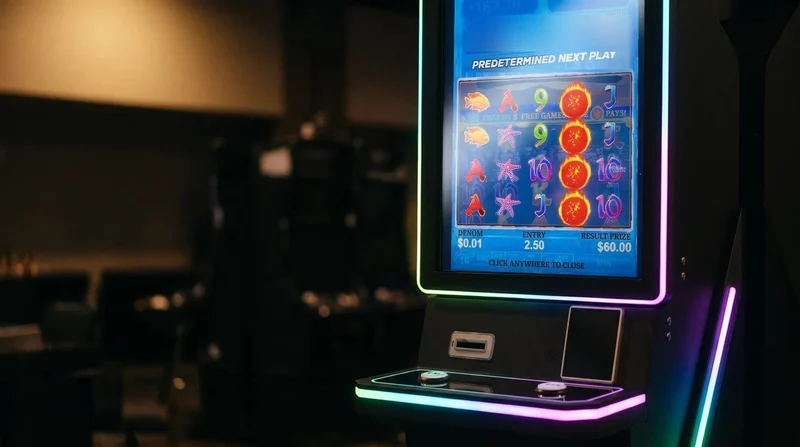
A no-chance system is a video game built so that every possible result already exists before anyone plays. The machine pulls a result from that fixed set. It shows the result to the player. The player then decides whether to play for it. Nothing is calculated live. No random number generator decides it. No pseudo-random number generator decides it either. Nothing in the code leaves any part of it to chance. Foxfire's own version of this is built the same way: players preview their outcome, choose to play, and collect their prize.
That single design choice is what the category is named after. Not the marketing. Not the cabinet art. Whether the result exists before the play, or gets generated during it.
How is a no-chance system different from the redemption and skill games I already run?
Your claw machine and your redemption pushers rely on chance in the moment. What lands in the chute or what falls off the ledge is not fixed ahead of time. Your basketball cabinets and racing games rely on skill in the moment. The player's own input decides the score as it happens. Both of those games make their decision live, while the player plays. A no-chance system never does. Its decision was already made before the player walked up. It gets shown to them. It is not earned and it is not rolled.
That difference matters because each state writes its own rules for games that decide a result in the moment, and those rules change. A no-chance system does not ask anyone to weigh how much of a result came from the player and how much came from luck. The result was fixed before play, and a lab can check that in the code.
| What's already on your floor | Decides the result | When the result is known | Who confirms it |
|---|---|---|---|
| Claw machine, prize pusher | Chance, in the moment | As it happens | Nobody, by design |
| Basketball, racing, skill cabinet | Player performance, in the moment | As it happens | Depends on each state's rules |
| No-chance system | A fixed result set, before play | Shown before payment | An independent accredited lab |
Why does "predetermined outcome" sound like a warning sign in some vendor content?
Read enough vendor explainers and you will find the same two words used as a warning. One lists games "where outcomes are predetermined" right next to claw machines and coin pushers that "rely heavily on chance." It calls both something that "may raise regulatory questions." That reads like a warning about the words "predetermined outcome." The real warning is narrower than that. It is about a predetermined outcome nobody outside the vendor can check.
A result a vendor just tells you is fair, with nothing behind the claim, is a promise. A result an independent lab reads in the machine's own code, checks for any random process, and writes up in a report is a finding. Both get called "predetermined outcome." Only one has been checked by anyone besides the company selling the machine. Verified, against merely claimed. That is the line worth watching, not the two words themselves.
Who verifies that the outcome is actually predetermined, and how?
For Foxfire, that check comes from Eclipse Compliance Testing, an independent lab. It holds ISO/IEC 17025 and 17020 accreditation, the same kind state gaming authorities and the lottery industry use. ECT does not take a vendor's word for anything. It reads the machine's source code line by line. It checks for a random number generator, a pseudo-random number generator, or any other process that could leave a result to chance. Its verdict on Foxfire's system, word for word: "This device is not a slot machine." That finding sits in report NA_KMNCCS_7397-00_EW. On the strength of it, Foxfire's system is certified legal in all 50 U.S. states.
Want the deeper legal grounding? Predetermined outcome versus random outcome covers the three-element test states use to define gambling, and how a skill game's legal argument differs from a no-chance one. The ECT certification page covers what the lab checks and how the report reads.
Where does a no-chance system fit on a floor that already has redemption and skill games?
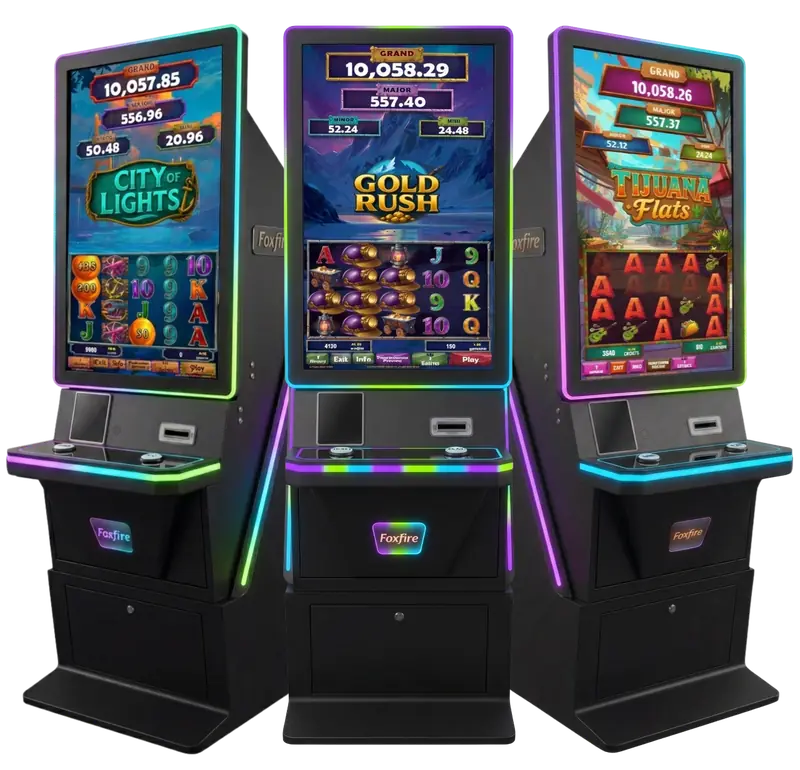
It does not replace either one. It sits beside them as its own category, the way your prize wall already sits beside your skill cabinets. One machine runs about 2 feet by 2 feet. A standard install is two machines plus a redemption kiosk, about 6 feet by 2 feet, roughly 12 square feet total. It runs off a standard 120V outlet like the rest of your floor. You provide the floor space, the outlet, and staff who know what the machine is. Foxfire provides the machines, the kiosk, delivery, installation, service, and collections and reporting. Placing it costs you nothing.
Before you sign anything with any vendor, what to ask before signing with any entertainment vendor is worth reading first. If a placement agreement is the next real question, how revenue share machine placement works, and what "no cost" really means walks through what a standard agreement covers.