Why does a slow night feel like it is bleeding money?
A Tuesday at nine. Two tables are working the floor, one dancer is on stage, and the sound system is playing to a room built for two hundred people. The lights are up the same as Saturday. The staff are on the clock the same as Saturday. The register just is not moving the same as Saturday.
It feels like the room is losing money because it is. Rent does not know what night of the week it is. Staff hours do not shrink on their own. Utilities run whether the floor is full or empty. You are also not the only room feeling it. RCI Hospitality Holdings, which calls itself the country's leading company in adult nightclubs, reported its same store nightclub sales as nearly level in its April 2026 sales release. If one of the biggest operators in the category is working just to stay even, one slow Tuesday in your room is not a sign you did something wrong.
What does an empty seat actually cost you?
Start with a number most rooms already set without giving it a name: the nightly sales target. One club sales manager uses a method as simple as it sounds. Take what you want the room to bring in tonight, divide it by how many seats you have, and that is the number every seat needs to hit. On an industry sales panel, she put it exactly this way: decide what you want the numbers to be tonight, then divide that by your seat count, and there is your answer.
Run that math on a slow night and the empty seat problem turns into a real number fast. Say your room seats 50 and tonight's target is 5,000 dollars. Divide the target by the seats and each one needs to earn about 100 dollars. On a typical slow night, half the room, 25 seats, pulls closer to 40 dollars each instead of 100. That gap is 60 dollars a seat. Multiply it by 25 seats and you are 1,500 dollars short before you even look at the register total. These numbers are illustrative, not a report on any real venue. Your own seat count and target will be different. The math is the point, not these particular figures.
Why do the same seats keep going empty?
Part of the answer is not about tonight at all. It is about who is not coming through the door as often anymore. Alan Markovitz, who operates gentlemen's clubs in four states, told the BBC plainly that the Baby Boomers who carried his business for twenty years are retiring, and younger guests are not replacing them the same way. That is not a comment on any one club doing something wrong. It is a customer base changing size, the same shift showing up in bars and restaurants working their own slow weeknights.
That reality does not make a slow seat unfixable. It just means the fix has to reach a guest who was never going to spend the way an aging regular did.
How do you read the room instead of just pushing bottles?
Reading a slow room well is a skill, not a script. A sales trainer on the same industry panel described upselling as an art form: understanding how to read a customer, not looking at them as a dollar sign, and figuring out what they actually came in for tonight. A guest who was never going to buy a bottle might still spend, once you are offering the thing they actually want instead of the thing that is easiest to sell.
How do you get the same guests to come back?
Two habits do more work here than any single promotion. The first is recognition. Club Grid founder Eric Zhivalyuk puts it simply: when guests feel valued, they stay longer, spend more, and come back more often, and that recognition matters most in the moment, not after the fact. A host who greets a regular by name on a dead Tuesday is doing real revenue work, not just being friendly. If you want the deeper case for why that habit pays off, how to get customers to stay longer, and spend more while they do walks through it.
The second habit is measurement, and it applies to what leaks out the back as much as what comes in the front. One old truism from bar management still holds: if you cannot measure it, you cannot manage it. Industry wide, roughly one out of every five kegs of draft beer purchased is lost to waste, spillage and theft before it ever reaches a glass. A slow night with a leaky pour cost is losing money twice. Fix the leak, and every dollar the room does earn on a slow night keeps more of itself.
Where does a revenue line that skips the bar entirely fit?
Everything above still runs through the bar. Better pours, warmer greetings, sharper upselling, a fuller room eventually. None of it is wrong and none of it should stop. But a line that does not depend on bar spend at all is worth adding next to it, because it earns the same on a slow Tuesday as it does on a packed Saturday.
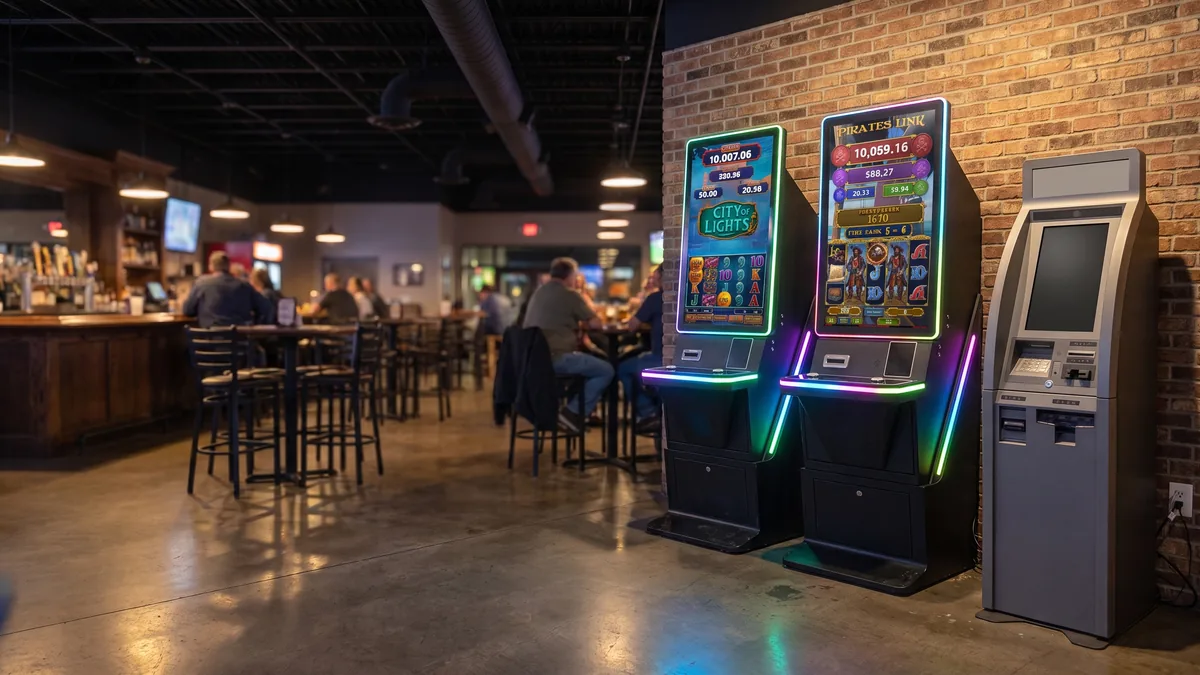
Foxfire places a machine the same way in a gentlemen's club as in any other venue, at zero cost to you. Foxfire provides the machine and the redemption kiosk, delivery and installation, service and maintenance, and collections and reporting. You provide the floor space, a standard 120V outlet, and staff aware of what is on it. One machine measures about 2 feet by 2 feet. A standard install is two machines plus a kiosk, about 6 feet by 2 feet, roughly 12 square feet, and it fits along a wall without touching seat count or sightlines to the stage.
Each system is a no-chance video game system. The outcome is predetermined and shown to the player before they pay, which removes the element of chance entirely. No RNG. No PRNG. No stochastic process. Zero. Eclipse Compliance Testing, an independent accredited lab used by state gaming authorities and the lottery industry, reviewed the source code and confirmed it. Their verdict, word for word: "This device is not a slot machine." Foxfire systems are certified legal in all 50 U.S. states.
None of this replaces the work above. It sits beside it, earning on the part of a slow night that bar spend alone was never going to fix. If you want to see the rest of the revenue list a room your size should already be running, how nightclubs add revenue beyond the bar covers it. If you want the formula behind what a placement actually returns before you ask for a walkthrough, how much money do bar game machines make? shows the math.