
Qualifying Foxfire Machines for Bonus Depreciation
A comprehensive guide to using commercial-grade Foxfire machines as qualifying business assets under the Internal Revenue Code, including the permanent 100% bonus depreciation restored by the One Big Beautiful Bill Act.
Turning Play Into Tax Strategy
Bonus depreciation, the additional first-year deduction under IRC Section 168(k), lets a business immediately deduct a large percentage of the cost of qualifying assets rather than depreciating that cost over many years. The One Big Beautiful Bill Act of 2025 permanently restored the rate to 100%.
This guide explains how investing in the purchase of commercial-grade Foxfire machines, used within a trade or business, can qualify for that deduction.
Understanding Bonus Depreciation
An accelerated first-year deduction for qualifying business assets placed in service. Four requirements determine eligibility.
Property Type
The property must be tangible personal property depreciated under MACRS with a recovery period of 20 years or less.
Acquisition Date
For the restored 100% bonus depreciation, the property must be acquired after January 19, 2025, the date tied to the OBBBA.
Placed in Service
The property must be placed in service within the required timeframe, meaning it is ready and available for its intended use.
Original or Used
Original use must begin with the taxpayer. Used property can qualify if it was not previously used by the taxpayer and not acquired from a related party.
| Placed in Service Period | Bonus % |
|---|---|
| After Sept 27, 2017 to before Jan 1, 2023 | 100% |
| Calendar year 2023 | 80% |
| Calendar year 2024 | 60% |
| Jan 1, 2025 to Jan 19, 2025 | 40% |
| Acquired and placed in service after Jan 19, 2025 | 100% (Permanent) |
Source: IRC Section 168(k)(6), One Big Beautiful Bill Act of 2025.
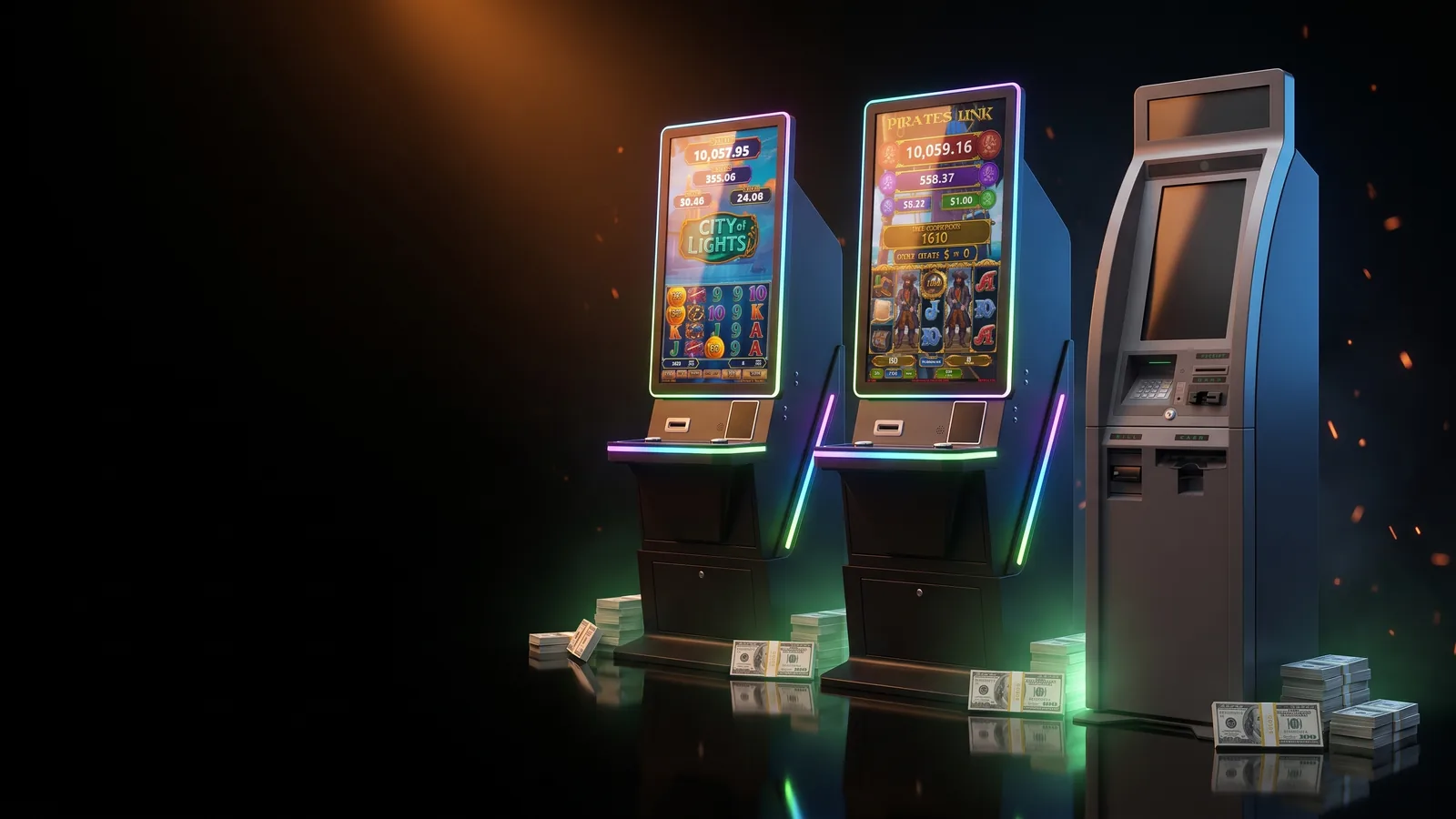
Commercial-Grade Machines, In Real Businesses
Tangible personal property, placed in service where customers play.
Foxfire Machines as Qualified MACRS Property
A Foxfire machine is tangible personal property, a primary category of assets eligible for bonus depreciation. Under MACRS, assets are assigned to classes that set their depreciable life, or recovery period.
Per IRS guidance, coin-operated amusement devices, including video game systems, fall under Asset Class 79.0, titled Recreation, with a 10-year class life and a 7-year MACRS recovery period under the General Depreciation System. Because 7 years is well below the 20-year maximum for qualified property, a machine in this class satisfies that requirement.
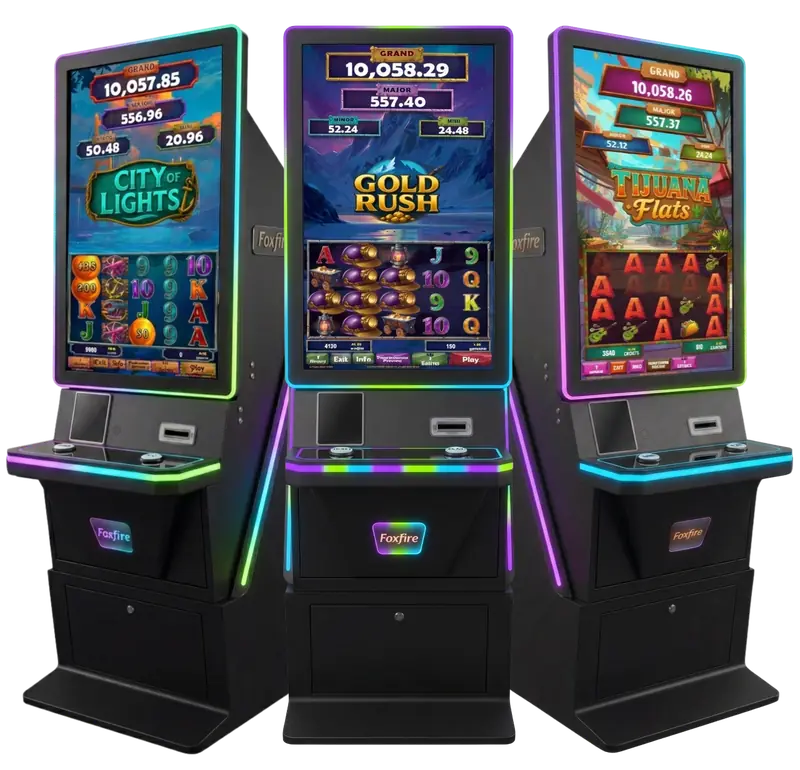
Classification per Rev. Proc. 87-56. Confirm that your specific machines and facts map to Asset Class 79.0 with your own tax advisor.
The 'Used in a Trade or Business' Requirement
Depreciation deductions, including bonus depreciation, are only permitted for property used in a taxpayer's trade or business, or held for the production of income. For an activity to be considered a trade or business, the primary motive must be income or profit. A sporadic activity or a hobby does not qualify.
To claim depreciation on a Foxfire machine, a business must demonstrate a clear and legitimate business purpose. That purpose does not have to be direct revenue generation. An expense is considered ordinary and necessary under IRC Section 162 if it is common and accepted in the trade or business and is helpful and appropriate.
Enhancing customer experience
In service-based businesses, a machine in a waiting or lounge area can entertain clients, reduce perceived wait times, and improve satisfaction. This can lead to stronger retention and positive referrals.
Boosting employee morale
Placing a machine in an employee break room can improve morale, reduce stress, and foster a positive work environment. A happier and less stressed workforce can lead to higher productivity and lower turnover.
Direct revenue generation
The most straightforward business use is in venues where the machine itself generates revenue through play, or where it serves as a primary attraction that draws paying customers.
A Foxfire machine placed in service at a venue can serve a dual business purpose. It generates direct revenue from play while increasing customer dwell time and foot traffic. This helps satisfy the IRC Section 162 ordinary and necessary business expense standard.
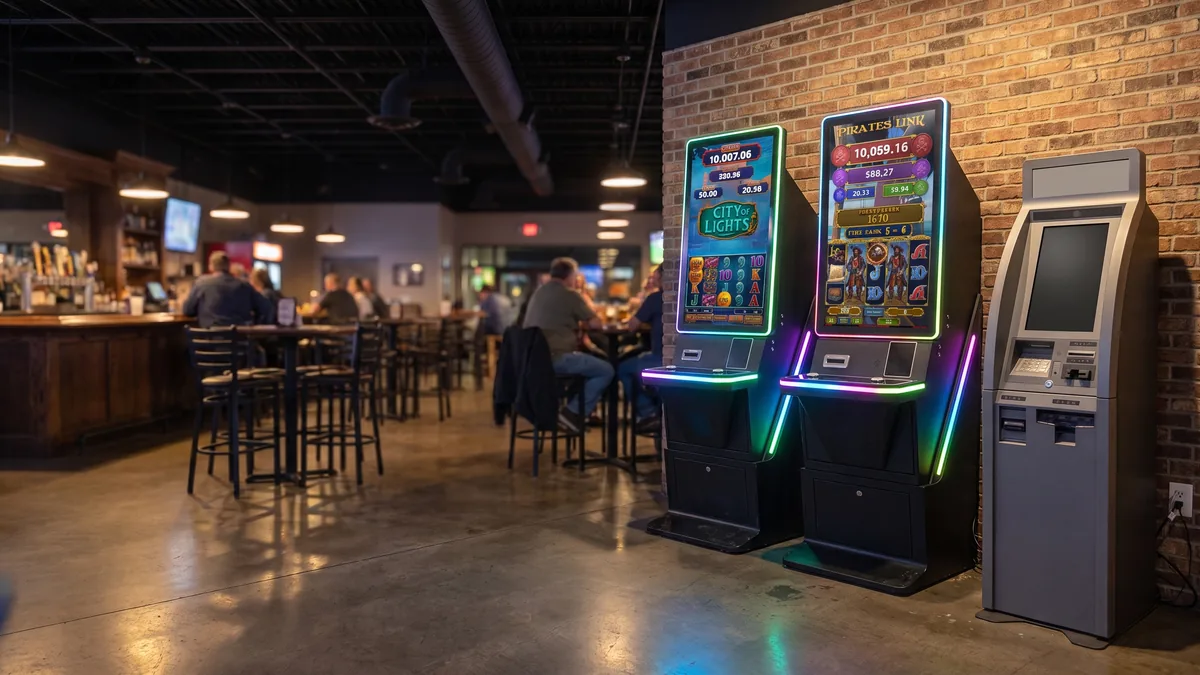
A Working Asset, Not a Display Piece
Revenue, dwell time, and a clear business purpose in one footprint.
Navigating the Listed Property Rules
Critical compliance requirements for entertainment, recreation, and amusement property.
A significant consideration when depreciating a Foxfire machine is that it falls under the definition of listed property in IRC Section 280F. Listed property includes property generally used for entertainment, recreation, or amusement. This classification imposes two critical requirements.
Heightened substantiation
The taxpayer must maintain rigorous records to substantiate business use, as required by IRC Section 274(d). This includes:
- Detailed logs of the amount of use
- The specific business purpose for each use
- The date and duration of each use
- Documentation of business versus personal use hours
Greater than 50% business use
To claim MACRS depreciation, and by extension bonus depreciation, qualified business use of the listed property must exceed 50% of its total use during the taxable year.
- Above 50%: MACRS and bonus depreciation are available.
- 50% or less: only ADS straight-line depreciation is allowed.
For a machine in a venue waiting area, business use is the hours it is available to clients during business hours. Personal use by the owner or family after hours would need to be tracked to ensure the 50% threshold is met. For a machine in an employee break room, its availability to employees during work hours is the business use. The key is maintaining contemporaneous records that clearly separate business use from personal use.
Foxfire handles deployment, maintenance, and the compliance record-keeping the listed-property rules require. You receive the contemporaneous logs of business use, location, and revenue needed to substantiate the deduction, so the heaviest paperwork burden is managed for you.
Tax Savings Estimator
Estimate your first-year deduction and tax savings for a Foxfire machine investment. This is an estimate, not tax advice.
Estimates only. Bonus depreciation for listed property requires business use above 50%. Actual results depend on your tax situation and state. Consult a qualified tax professional.
Record-Keeping Checklist
Track the substantiation requirements for listed property to support your bonus depreciation eligibility.
Tax Savings, Then Monthly Revenue
The machines do not just cut the tax bill. They generate monthly cash after every expense.
The deduction is only the first return. Once placed in service, each Foxfire machine operates as a standalone profit center, earning monthly income through play. After customer payouts, the venue operator's revenue share, software, maintenance, and debt service, a conservatively estimated machine still nets positive cash flow every month. That revenue stacks on top of the first-year tax deduction, so the same asset pays off twice.
| Line Item | Structure |
|---|---|
| Gross income per machine | $5,000 conservative to $10,000 optimistic / mo |
| Customer payout | 30% of gross revenue |
| Venue operator share | 25% of gross revenue |
| Software and maintenance | 30% of gross revenue |
| Debt service | Fixed monthly, 0% dealer financing |
| Net profit per machine (conservative) | $1,147 / mo |
Revenue projections are hypothetical and for illustrative purposes only. Actual income varies by location, foot traffic, and market conditions.
The $1.5M Scenario
An individual taxpayer, married filing jointly, earns $1,500,000 in taxable income for the 2025 tax year. Operating a legitimate trade or business, the taxpayer invests in the purchase of 10 commercial-grade Foxfire machines at $150,000 each, a total investment of $1,500,000, with $250,000 down and the remaining $1,250,000 at 0% dealer financing. The machines are placed in service after the OBBBA effective date and used for business, qualifying for 100% bonus depreciation on the full $1,500,000 regardless of how the purchase is financed.
| Line Item | Without Foxfire | With Foxfire |
|---|---|---|
| Gross taxable income | $1,500,000 | $1,500,000 |
| Foxfire machines (10 at $150,000) | n/a | ($1,500,000) |
| Bonus depreciation (100%, OBBBA) | n/a | ($1,500,000) |
| Adjusted taxable income | $1,500,000 | $0 |
| Federal tax owed (MFJ) | $479,062 | $0 |
Illustrative only. Not tax advice. State taxes, AMT, and other factors may affect actual results. Consult a qualified tax professional.
The $1M Roth Conversion
An individual taxpayer, married filing jointly, converts $1,000,000 from a Traditional IRA to a Roth IRA in the 2025 tax year. The conversion is treated as ordinary income, creating a significant tax liability. To offset it, the taxpayer invests in the purchase of 10 commercial-grade Foxfire machines at $100,000 each, a total investment of $1,000,000, with $250,000 down and the remaining $750,000 at 0% dealer financing, qualifying for 100% bonus depreciation. The $1M deduction fully offsets the $1M conversion income, leaving $0 taxable income and $0 federal tax on the conversion.
| Line Item | Without Foxfire | With Foxfire |
|---|---|---|
| IRA to Roth conversion | $1,000,000 | $1,000,000 |
| Foxfire machines (10 at $100,000) | n/a | ($1,000,000) |
| Bonus depreciation (100%, OBBBA) | n/a | ($1,000,000) |
| Adjusted taxable income | $1,000,000 | $0 |
| Federal tax owed (MFJ) | $294,062 | $0 |
Illustrative only. Not tax advice. Offsetting Roth conversion income with business depreciation depends on the taxpayer's circumstances, including material participation. Consult a qualified tax professional.
A 1,548% 15-Year Return
Year 1 tax savings alone exceed the cash invested. Every year after is operating profit.
This scenario models 10 machines at $100,000 each, a $1,000,000 total investment with $250,000 down (25%) and the remaining $750,000 at 0% dealer financing. At a 37% marginal tax rate, the first-year deduction returns $370,000 in tax savings, more than the entire down payment. Over 15 years, after every loan payment, the same investment returns $3.87M in net cash flow.
| Period | Net Operating Income | Loan Payment | Tax Savings | Net Cash Flow |
|---|---|---|---|---|
| Year 1 | $283,320 | ($50,000) | $370,000 | $603,320 |
| Years 2 to 15 (each) | $283,320 | ($50,000) | $0 | $233,320 |
| 15-Year Total | $4,249,800 | ($750,000) | $370,000 | $3,869,800 |
The $370,000 in Year 1 tax savings exceeds the $250,000 down payment by $120,000. The investment is cash-positive from day one, and all subsequent net operating income is profit.
Illustrative only. Not tax advice. Assumes a 37% marginal rate, 0% dealer financing, and a revenue level above the conservative monthly model shown earlier. Actual results vary by location, financing terms, tax rate, and hold period. Consult a qualified tax professional.
Conclusion
A Foxfire machine can qualify for 100% bonus depreciation under Section 168(k) when it is integrated into a trade or business and the record-keeping requirements are met. Its 7-year MACRS recovery period places it within qualified property, while its listed-property status calls for contemporaneous records proving business use above 50%. Establish a clear connection between the machine and a legitimate business purpose, and the asset can meaningfully reduce tax liability in the year it is placed in service.
Frequently Asked Questions
Can I claim bonus depreciation if I am self-employed?
Yes. Bonus depreciation is available to sole proprietors, partnerships, S corporations, and C corporations. What matters is that the equipment is used in a trade or business or held for the production of income, not the entity type.
Does the machine have to be brand new to qualify?
No. Both new and used equipment can qualify. For used equipment, the machine must be new to you, meaning you did not previously use it and you did not acquire it from a related party.
What types of machines qualify?
Generally, commercial-grade video game systems that are tangible personal property with a MACRS recovery period of 20 years or less. The IRS classifies coin-operated amusement devices under Asset Class 79.0 with a 7-year recovery period, well within the limit.
How do I prove business use exceeds 50%?
Keep contemporaneous records: where the machine is located, the hours it is available for business use, any personal use, and the resulting business use percentage. For revenue-generating placement, transaction and revenue records also help.
What happens if business use drops below 50% in a later year?
If qualified business use falls to 50% or less, you generally must switch to the Alternative Depreciation System and may face depreciation recapture on the excess benefit already claimed. This is why ongoing tracking matters.
Can I place the machine in my home office?
Possibly, but listed-property scrutiny is higher for property that can be used personally. You would need clear records showing qualified business use over 50% and a legitimate business purpose. Discuss home placement carefully with your CPA.
Can I use Section 179 instead of bonus depreciation?
Section 179 expensing is a separate provision with its own dollar limits and a taxable-income limitation. Some taxpayers use 179, bonus depreciation, or a combination. Your CPA can model which fits best.
Can bonus depreciation create a net operating loss?
In some cases bonus depreciation can reduce taxable income below zero, creating a net operating loss that may be carried forward under current rules. The interaction with other income is situation-specific.
Can I claim the full deduction even if I finance the purchase?
Yes. Under IRC Section 168(k), the full cost of qualified property is eligible for bonus depreciation in the year it is placed in service, regardless of how the purchase is financed. The deduction is based on cost, not cash paid, and the interest rate does not change the first-year amount.
What happens if the machine breaks down or needs repairs?
Routine downtime for repairs generally does not disqualify the asset, as long as it remains in service and devoted to business use. Keep maintenance and repair records as part of your substantiation.
Will claiming bonus depreciation trigger an audit?
A legitimate, well-documented deduction is a normal part of business tax filing. The best protection is contemporaneous records that substantiate business use and a clear business purpose. Listed property carries heightened substantiation requirements under IRC Section 274(d).
Tax Terms Glossary
Key tax terms and IRC provisions relevant to Foxfire machine bonus depreciation.
Modified Accelerated Cost Recovery System (MACRS)IRC 168
The standard method for depreciating most business property over a set recovery period.
Bonus DepreciationIRC 168(k)
An additional first-year deduction allowing immediate write-off of a percentage, currently 100%, of qualified property.
Listed PropertyIRC 280F(d)(4)
Property that lends itself to personal use, including entertainment, recreation, and amusement, subject to heightened substantiation and a business use test above 50%.
Net Operating Loss (NOL)IRC 172
A loss that occurs when deductions exceed income, which may be carried forward to offset future income.
Depreciation RecaptureIRC 1245 / 280F(b)(2)
Rules that may tax previously claimed depreciation as ordinary income when an asset is sold or business use drops.
Placed in ServiceTreas. Reg. 1.167(a)-11(e)(1)
When property is ready and available for its intended use, the trigger for depreciation.
Recovery PeriodIRC 168(c)
The number of years over which property is depreciated under MACRS.
Section 179 ExpensingIRC 179
An election to expense qualifying property up front, subject to dollar and income limits.
Alternative Depreciation System (ADS)IRC 168(g)
A straight-line depreciation method required in certain cases, including listed property at 50% or less business use.
General Depreciation System (GDS)IRC 168(a)
The default MACRS system, generally using accelerated methods.
Depreciable BasisIRC 167(c)
The amount of an asset's cost that is subject to depreciation.
Substantiation RequirementsIRC 274(d)
The contemporaneous record-keeping required to support deductions for listed property.
Asset Class 79.0Rev. Proc. 87-56
The Recreation asset class covering coin-operated amusement devices, with a 7-year GDS recovery period.
Roth ConversionIRC 408A
Moving funds from a traditional retirement account to a Roth, treated as ordinary income in the year of conversion.
Qualified PropertyIRC 168(k)(2)
Property eligible for bonus depreciation, generally tangible property with a recovery period of 20 years or less.
One Big Beautiful Bill Act (OBBBA)2025
The law that permanently restored 100% bonus depreciation for property placed in service after January 19, 2025.
Tax Cuts and Jobs Act (TCJA)P.L. 115-97
The 2017 law that introduced 100% bonus depreciation and the original phase-down schedule.
Half-Year ConventionIRC 168(d)(1)
A convention treating property as placed in service at the midpoint of the year.
Form 4562IRS Form 4562
The form used to claim depreciation and amortization, including bonus depreciation.
Adjusted BasisIRC 1016
An asset's basis after adjustments such as depreciation, used to figure gain or loss on sale.
References
Primary authorities and resources cited throughout this guide.
This guide adapts a publicly available tax strategy reference for Foxfire machines. Sources point to the original authorities. Tax laws are complex and change over time.
Contact Your CPA
A starting template to send your tax advisor explaining the Foxfire machine depreciation strategy. Customize the bracketed sections before sending.
Important note. This page is for informational purposes only and does not constitute legal or tax advice. The information presented should not be relied upon as a substitute for consultation with a qualified tax professional. Tax laws are complex and subject to change. Individual results depend on each investor's situation and their state. Talk to your own CPA or tax advisor before making any tax-related decisions. Foxfire Games does not promise any specific tax savings, deduction, or return.
Want the Details for Your Situation?
Schedule a free discovery call to explore how Foxfire machines can reduce your tax liability. We will walk you through how it works and what bonus depreciation could mean for your business. Bring your CPA into the conversation any time.
Own the machines. Deduct the cost.